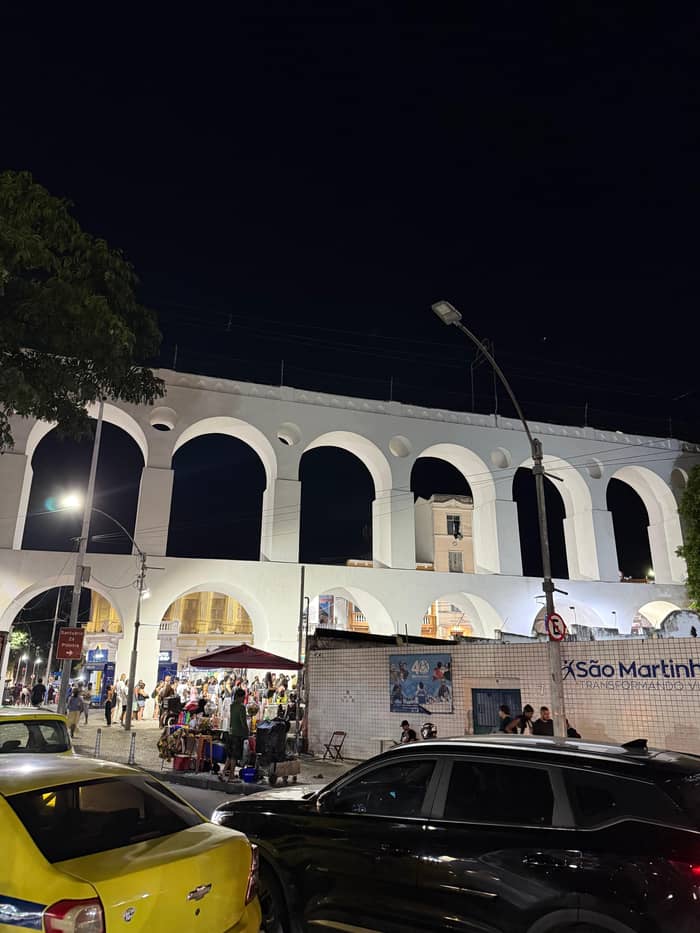
Easy start
Chope
Rio's draught beer
- WhereAny boteco
- ServedSmall, very cold
- Pairs withBar snacks
Pick-for-me guide
Two questions, one drink
Say how you like to learn and how late you want to stay out, and a way to try Rio's drinks appears with its starting price.
Best match for you
from $33
At least 4 cachaça flavours with a guide, a caipirinha at the Arches, then samba bars.
Best match for you
from $18
2 hours in Copacabana: make and drink 2 caipirinhas, then a samba class.
Best match for you
from $16
1.5 hours of caipirinha making and a funk dance class.
Bars in Rio de Janeiro range from century-old counters to award-winning cocktail rooms. Here is what to order in each, how cachaça is graded, and where the classics stand.
Editorial team, lapapubcrawl.click · Updated November 11, 2026 · 7 mins to read
Basics
The everyday bar of Rio de Janeiro is the boteco: small, bright, often open to the pavement, with a counter of snacks, plastic or metal tables on the sidewalk and a tap pouring chope, the city's draught beer, in small cold glasses. A boteco is less a destination than a habit. People drop in after work, stand at the counter, order a round and some bites, and drift on. The pleasure is in the regular rhythm of fresh glasses arriving before the last one warms.
The city takes these places seriously. Riotur, the municipal tourism company, lists Real Chopp in Copacabana as serving its corner since 1982, known for its counter of snacks and its meatballs, and recognised as Carioca Cultural Heritage in 2023.6 Bar Ocidental, founded in 1956 as the pioneer of the Beco das Sardinhas lane in the centre, specialises in seafood and received the same title in 2023.7
Prices at a boteco are friendly by the standards of a tourist city. At Os Imortais, a Copacabana boteco on Riotur's list, the chope is BRL 6.90 between 18h and 20h30 from Wednesday to Friday and BRL 9.90 the rest of the time.5 Happy hours like that are a local institution. Arrive early, take a pavement table, and watch the street fill as offices empty and the light turns gold.
Heritage bars
| Bar | Area | Opened | Recognised |
|---|---|---|---|
| Bar Brasil | Lapa | 1907 | 2011 |
| Bar Jobi | Leblon | 1956 | 2011 |
| Bar Ocidental | Centro | 1956 | 2023 |
| Real Chopp | Copacabana | 1982 | 2023 |
| Adega Douro | North Zone | 1967 | 2024 |
Carioca Cultural Heritage bars as Riotur describes them; hours change, check before you go.4,10,7,6,11
The caipirinha is the popular drink in Rio de Janeiro that every visitor orders first, and Brazilian law even defines it. The current beverage decree, Decree 12.709 of 2025, which replaced the 2009 decree, names the caipirinha the typical drink of Brazil and sets the bottled, ready-made kind at 15 to 36 percent alcohol, made with cachaça, lime and sugar.1,8 A caipirinha mixed at the bar has no fixed strength: each bartender builds the glass by hand, with more or less spirit, ice and fruit.
Making one is a small ritual. Wedges of lime go into a short glass with sugar and are pressed with a wooden muddler to release juice and the oils of the peel. Ice follows, then the cachaça, then a stir. The result is sour, sweet and strong at once, and it tastes softer than it is. That is the reason locals sip slowly and keep a beer or water alongside.
Bars play freely with the formula. Ask for a caipirinha with passion fruit, strawberry or another fruit and most bars will oblige; some swap the cachaça for vodka, which Brazilians call a caipiroska. Purists say the original is the one to try first, made with a good white cachaça and fresh limes. Order it at the counter where you can watch it being made, and you learn the drink as well as taste it.
Strength in the glass
Cachaça is the backbone of the caipirinha and a protected name. Brazil's beverage decree of 2025 defines it as the cane spirit produced in Brazil, at 38 to 48 percent alcohol by volume.2 Under the 2009 rules quoted in the agriculture ministry's cachaça yearbook, a spirit made from molasses fell into a separate class, aguardente de melaço, with its own range of 38 to 54 percent.9 The word itself is a geographical indication, reserved for producers established in Brazil under a decree of 2001.15
The agriculture ministry's cachaça yearbook sets out the aged grades. An aged cachaça holds at least 50 percent spirit rested in wooden casks of up to 700 litres for at least 1 year; premium is 100 percent aged for at least 1 year; extra premium is premium aged at least 3 years.3 The same yearbook classes a cachaça with more than 6 and less than 30 grams of sugar per litre as sweetened, cachaça adoçada.16
Wood shapes the flavour. Besides American and European oak, producers use native Brazilian woods for their casks, among them amburana, amendoim, bálsamo, ipê, jatobá and jequitibá, the ministry notes.17 At the end of 2018, Brazil counted 951 registered cachaça producers, led by Minas Gerais, with São Paulo, Espírito Santo and Rio de Janeiro following.18 Taste a clear cachaça beside an amburana-aged one and the difference is immediate.
First orders
Easy start
Rio's draught beer
The classic
Cachaça, lime, sugar
For tasting
Rested in wood
If you want one famous bar in Rio de Janeiro with history at the counter, start in Lapa. Bar Brasil has run since 1907, keeps an old turned bronze chope tap on its counter and was named Carioca Cultural Heritage in 2011, according to Riotur.4 It stands at Av. Mem de Sá, 90, on the same avenue where the Lapa crawl begins.19 Riotur lists it open from 11h to 00h Tuesday to Thursday and until 02h on Friday and Saturday.20
In Leblon, Bar Jobi opened in 1956, keeps its doors open deep into the night, displays a panel by Nilton Bravo, the artist who decorated botecos across the city, and became Carioca Cultural Heritage in 2011.10 Riotur gives its hours as 17h to 1h from Monday to Wednesday and on Sunday, and 18h to 3h from Thursday to Saturday.12 It is the place to finish a night in the South Zone.
The heritage list reaches beyond the tourist map. Baixo Gago dates from the 1940s and was recognised in 2022, and Adega Douro, a Portuguese adega founded in 1967 in the North Zone, joined the list in 2024.21,11 Each is a reminder that Rio's bar culture lives in every neighbourhood, not only on the beachfront.
Group cost
Choose a tasting, a workshop or the crawl and set your group size.
Side-by-side: 3 options
Choose a tasting, a workshop or the crawl and set your group size.
≈
View≈
View≈
ViewStarting prices as on the booking platform, converted at the ECB reference rate. You see the exact price at booking.
At a boteco
Arrive
Sit outside and watch the street fill up.
First round
Draught beer in small, very cold glasses.
Snacks
Bolinhos and fried snacks are part of the visit.6
Next round
Cachaça, lime and sugar, the three ingredients Brazilian law names.1
Leaving
Check your running tab before you pay.
For a newer scene, follow the city's awards. Riotur reported the winners of the 30th Veja Rio Comer & Beber awards, presented at the Copacabana Palace.22 In the bar categories, Jurema in Lapa won for bar food and Adega Pérola in Copacabana for traditional bar.13 Delirium Café Rio in Ipanema took the beer-list award and Liz Cocktail & Wine in Leblon the cocktail-list award.14
Cocktail rooms cost more than botecos. Riotur's page on Bar Madrid gives a glass of wine at BRL 10, a gin and tonic at BRL 25 and beers from BRL 12 to BRL 30.23 A signature cocktail in Leblon or Ipanema will usually sit above those boteco prices, and the setting, the glassware and the playlist are part of what you pay for.
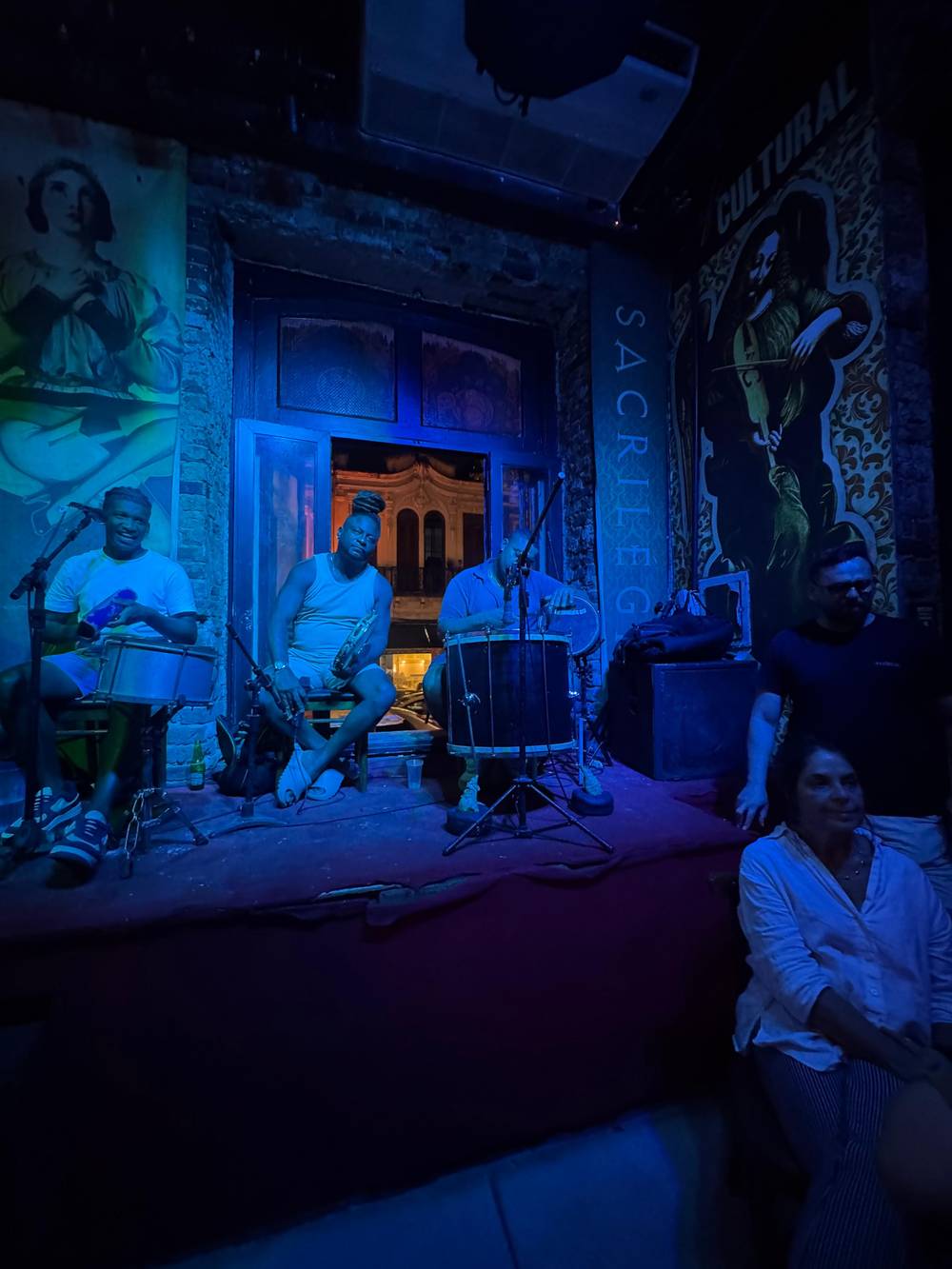
Mixing the two styles makes a good evening. Begin with chope at a boteco while the sun goes down, move to a cocktail bar for one carefully made drink, and end with live music in Lapa. The crawl on this site does a version of that in one night, from a cachaça bar to bars with live samba, with a guide who keeps the group together between stops.
Video
Cocktail Time with Kevin Kos on YouTube · The video stays unloaded until you press play.
In business since 1907, it is a traditional establishment of the city. On its counter stands an old chope tap turned in bronze.
Bar checklist
Ordering is easy even without Portuguese. Say the drink, hold up fingers for the number, and point at the snack you want on the counter. Many botecos keep a running tab on a slip at your table, and you pay when you leave. Check that slip now and then; it saves surprises at the end and helps you keep count of your rounds.
Choose what is in your glass with some care. The UK government reports deaths and serious illness in Brazil from drinks containing methanol, and urges care with spirit-based drinks such as gin, vodka and whisky.24 Smartraveller's advice is to drink only branded, sealed drinks.25 In practice that means trusted bars, bottles you can see opened, and caution with cheap spirits sold in the street.
Pace matters in a city where the caipirinha is strong and the nights are warm. Eat while you drink, alternate with water, and remember that Brazilian law forbids selling alcohol to anyone under 18.26,27 If anyone in your group feels suddenly much drunker than they should, the UK advice is to raise the alarm with a friend or the bar's security without delay.28
A tasting teaches more than a menu. The Lapa crawl begins at a cachaça bar with a tasting of at least 4 flavours and a class, and the night includes 5 cachaças and 1 caipirinha free. Guests rate its guides 4.8, and a recent review called the tasting interesting and informative. It is a quick way to learn which style you like before you start ordering on your own.
For hands-on practice, a Copacabana caipirinha workshop of 2 hours, from $18, has you mix 2 caipirinhas yourself before a samba class of 1 hour. A shorter version with a funk dance class runs 1.5 hours from $16. Both are good first evenings in Rio, before a bar crawl later in the week.
Whatever you choose, take the knowledge home. A bottle of aged cachaça from a Brazilian producer makes a better souvenir than most, and now you know how to read its label: the grade, the wood and the strength. Order a caipirinha at home and you will notice at once whether the bartender used real cachaça.
FAQ
Brazil's beverage decree of 2025 names the caipirinha the typical drink of Brazil.1
The 2025 decree lists cachaça, lime and sugar, at 15 to 36 percent alcohol for the bottled kind.1
Brazilian law gives cachaça its own definition: cane spirit made in Brazil at 38 to 48 percent.2
Premium is 100 percent aged at least 1 year; extra premium at least 3 years.3
It is served in small glasses; one Copacabana bar lists it at BRL 9.90.5
UK advice warns of methanol in some spirit-based drinks in Brazil.24
Sources
Going out in Lapa? Ask a real person here.